
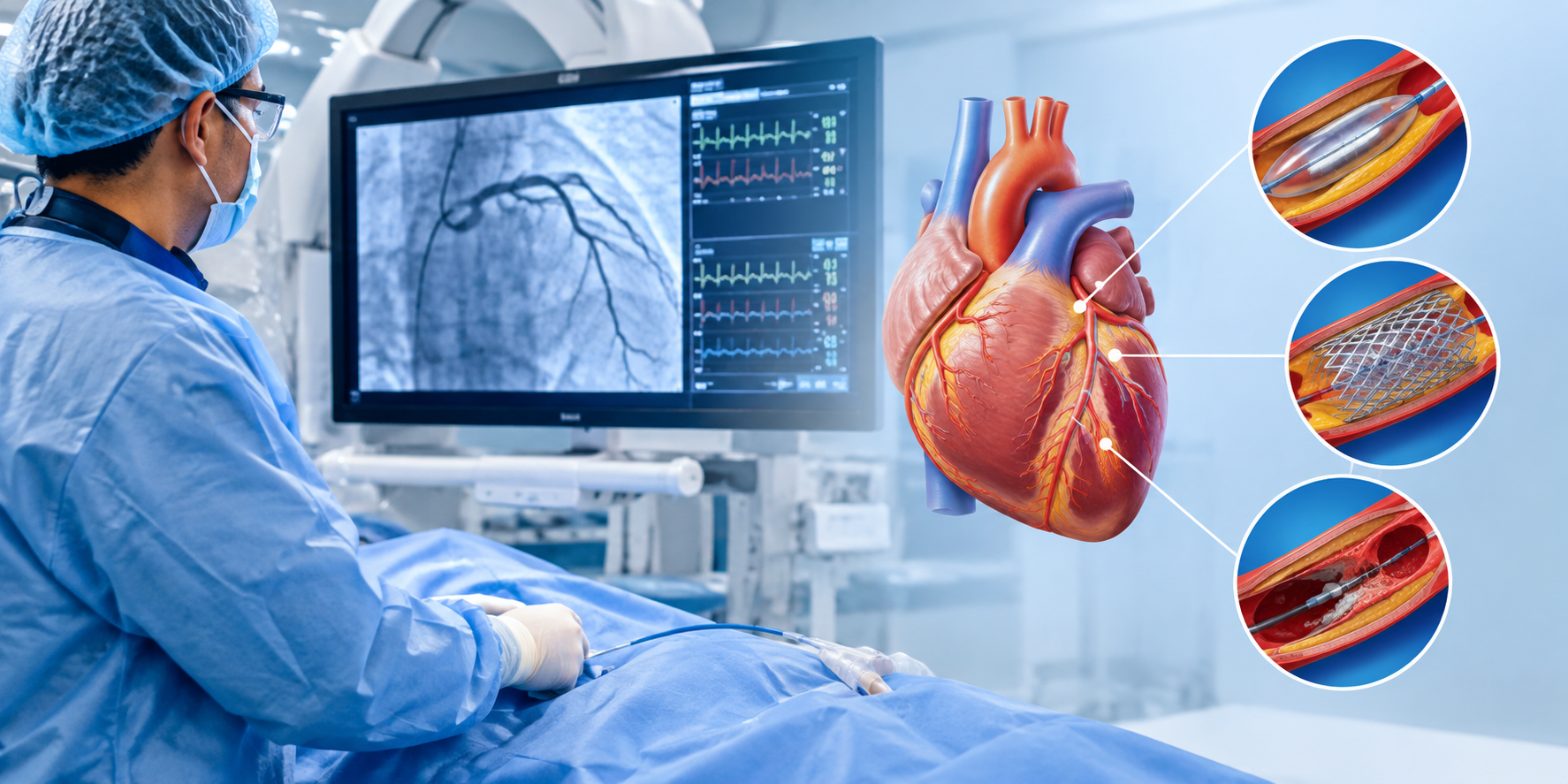
If you have been diagnosed with coronary artery disease, have experienced chest discomfort, or have been referred for further heart investigations, you may have heard the term interventional cardiology.
Interventional cardiology is a specialised area of cardiology that uses minimally invasive, catheter-based procedures to investigate and treat certain heart and blood vessel conditions. Depending on your symptoms, test results and overall health, an interventional procedure may be considered as part of your treatment plan.
For people looking for interventional cardiology in Springwood, understanding what these procedures involve and when they may be recommended can help you have a more informed discussion with your cardiologist.
1.What is interventional cardiology?
Interventional cardiology involves procedures performed using thin tubes called catheters that are guided through blood vessels to the heart or coronary arteries. These procedures can be used to investigate problems with blood flow and, in some circumstances, treat narrowed or blocked coronary arteries.
One commonly used procedure is a coronary angiogram. A coronary angiogram uses X-rays and contrast dye to produce images of the coronary arteries. It can help identify whether an artery is narrowed or blocked and where the narrowing or blockage is located.
Some interventional procedures can also be used to improve blood flow through a narrowed coronary artery. One example is percutaneous coronary intervention (PCI), which includes coronary angioplasty and, when appropriate, stent insertion.
2.When might you need interventional cardiology?
Not everyone with heart disease needs an interventional procedure. Your cardiologist will consider your symptoms, medical history, examination findings and results from investigations before recommending further treatment.
Interventional cardiology may be considered in situations such as:
Coronary artery disease
Coronary artery disease occurs when the arteries supplying blood to the heart become narrowed or blocked, often because of a build-up of plaque.
Depending on the severity of the disease and your symptoms, treatment may include lifestyle changes, medicines, monitoring or further procedures.
If significant narrowing is identified, your cardiologist may discuss whether an interventional procedure is appropriate for you.
For people searching for coronary artery disease in Springwood, assessment by a cardiologist can help determine the appropriate next step based on individual circumstances.
Angina or chest discomfort
Angina refers to chest discomfort caused by reduced blood flow to the heart muscle. Symptoms can vary between people and may include pressure, tightness, heaviness or discomfort in the chest.
A coronary angiogram may be recommended when coronary heart disease is suspected or when further investigation of symptoms such as angina is required.
Whether an intervention is needed depends on the findings and the overall clinical picture. A procedure is not automatically required simply because someone experiences chest discomfort.
A heart attack
Interventional cardiology can play an important role in the treatment of certain heart attacks.
In appropriate circumstances, PCI can be used to restore blood flow through a blocked coronary artery. The Australian clinical guideline for acute coronary syndromes emphasises timely reperfusion for eligible patients with certain types of heart attack, with PCI an important treatment option when it can be performed within the appropriate timeframe.
A suspected heart attack is a medical emergency. If you experience sudden or severe chest pain, difficulty breathing, sweating, nausea or other symptoms that may indicate a heart attack, call 000 rather than waiting for a routine cardiology appointment.
3.What is coronary angiography?
Coronary angiography, also called a coronary angiogram, is an imaging procedure used to examine the coronary arteries.
During the procedure, a catheter is inserted into an artery, commonly through the wrist or groin. It is carefully guided towards the heart, where contrast dye is introduced. X-ray images are then taken to show blood flow through the coronary arteries.
A coronary angiogram can help the treating team understand whether there are narrowed or blocked arteries and assist with decisions about appropriate treatment.
If you have been referred for coronary angiography in Springwood, your cardiologist or treating hospital team can explain why the test has been recommended, how to prepare and what to expect afterwards.
4.What happens during coronary angioplasty and stent insertion?
If a significant coronary narrowing is identified and PCI is considered appropriate, coronary angioplasty may be performed.
During angioplasty, a small balloon attached to a catheter is guided to the narrowed section of the artery. The balloon is inflated to help widen the narrowed area. In some cases, a stent may also be inserted to help keep the artery open.
PCI is not suitable for every type of coronary artery disease. Depending on the location and extent of disease, as well as other individual factors, treatment may instead involve medicines, monitoring or another form of revascularisation.
5.Does every patient with blocked arteries need a stent?
No.
A diagnosis of coronary artery disease does not automatically mean that a stent or other cardiac procedure is required.
Treatment decisions depend on factors such as the severity and location of coronary artery narrowing, symptoms, other medical conditions and the results of investigations. Your cardiologist will consider these factors when discussing treatment options with you.
Australian clinical guidance supports individualised decision-making and shared discussions between clinicians and patients when managing cardiovascular conditions.
6.How can a cardiologist help?
A cardiologist can assess your symptoms and cardiovascular risk and determine whether further investigations may be appropriate.
Depending on your situation, this may involve reviewing your medical history, performing a clinical assessment and arranging investigations such as an ECG, echocardiogram, exercise testing or other cardiac imaging.
If further assessment suggests that an invasive procedure may be appropriate, your cardiologist can discuss the reasons for the referral and the available treatment options.
For patients searching for a cardiologist in Springwood QLD, heart specialist in Springwood, or a cardiologist in Logan QLD, local cardiology assessment can provide an opportunity to discuss symptoms and appropriate investigations.
Patients from surrounding areas such as Daisy Hill, Underwood and Rochedale may also seek cardiology assessment in the wider Logan and Brisbane region.
7.When should you speak with a cardiologist?
Consider discussing your heart health with a medical professional if you have symptoms such as recurring chest discomfort, unexplained shortness of breath, palpitations or reduced exercise tolerance, particularly if you have cardiovascular risk factors.
A referral to a cardiologist does not necessarily mean that you will need an invasive procedure. It provides an opportunity for your symptoms and test results to be assessed and for appropriate options to be discussed.
If you are looking for interventional cardiology in Brisbane, interventional cardiology in Springwood, or an interventional cardiologist in Logan, your GP or cardiologist can advise whether specialist assessment or referral for an interventional procedure is appropriate.
8.Interventional cardiology at Springwood Cardiology
If you have been advised to see a cardiologist because of chest symptoms, suspected coronary artery disease or an abnormal cardiac investigation, Springwood Cardiology can provide specialist assessment and help determine the appropriate next step.
Interventional procedures are generally performed in a suitable hospital or cardiac facility by appropriately trained specialists. Your cardiologist can explain whether a procedure such as coronary angiography or PCI may be relevant to your individual circumstances.
9.Final thoughts
Interventional cardiology provides important diagnostic and treatment options for some people with coronary artery disease and other cardiovascular conditions. Procedures such as coronary angiography and PCI can help doctors assess coronary blood flow and, when clinically appropriate, treat certain narrowed or blocked arteries.
However, the need for an interventional procedure varies from person to person. A thorough assessment and discussion with your treating cardiologist is important before deciding on any cardiac procedure.
If you are experiencing symptoms that concern you about your heart, speak with your GP or cardiologist. For severe or sudden symptoms that may indicate a heart attack, call 000 immediately.